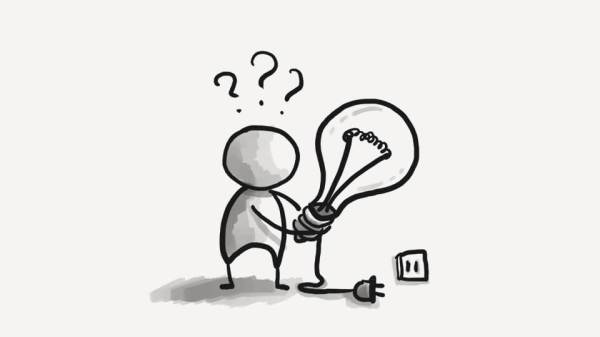
“It is not the strongest or the most intelligent who will survive but those who can best manage change.”
– Leon C. Megginson
It’s truly amazing thing to see how life – the world – has been redefined over the years. As we not only observe but also witness and experience its changes, we explore the endless opportunities of where life can take us and just where we as a race fits into the evolutionary curve. When you take time to reflect, you will be hit with an obvious but still surprising realization which is the fact that the world has been in a primitive state longer than it has been in this advanced age – as far as we know of. This in itself shifts our perspective and understanding on what life is, what can life can become what are the boundaries of evolution.
The world and life itself, can no longer be simply defined by the present, for the rate that progression has accelerated has proven that the future is only as far as the now. What this means is that at present we can no longer measure progress, set goals or anticipate developments in decades, for evolutionary breakthroughs are being realized within a lustrum – a 5 year span. It’s a remarkable but yet confrontational era, one where we must embrace the reality of how time itself has transitioned into a new dynamic, allowing us to exist in the present but just as much live in the future as everything unfolds so instantaneously.

I’d like to give you a little exercise: take a minute, close your eyes and imagine life 50 years ago. (1 min pause) Now, simply try to compare then to now and imagine all that happened within that period, how much we’ve achieved since then, and ask yourself: does it feel like 50 years? To think that 50 years ago is a reality so close but yet so far, simply because of how much our development has impacted the relativity of time itself through evolution. This is an indication that time is truly relative, for to people 50 years ago, 50 years ahead may have not seemed so far because they couldn’t imagine the world transforming at such a scale. But to people 50 years ahead [in the now], 50 years ago seems forever because you are not only traveling back in time but you’re also traveling back, away towards a less advanced reality. Now, don’t stop imagining just yet. I want you to think a bit more on life back then. Think on how people lived their lives on a day-to-day basis, think about their feelings and reactions to being introduced to ideas they had no understanding of nor did their minds ever dared to explore. Imagine living in a time where people dared not to share ideas, people dared not to think beyond, people dared not to dream. Back then, people dared not to, and today we’re living the dreams of the silent. Our reality is the fantasy of a few loud people but a whole lot of silent, for example: we now drive cars that run on a battery source – cars that no longer need gas, and we walk around with a device so small that it fits in our pockets but yet so strong it connects us to all the information and people in the world. Today, this is what normal means to us because this is what we know, but imagine being born into a time when there was no indication or inspiration to even imagine such things. Taking time to reflect should allow you perspective on how impressive it is to see just how far we’ve come. And it’s not that we were less intelligent than we are now, it’s simply that our imagination lacked the freedom to imagine. During that era, the thought of creating such tools, systems, technologies, and inventions were as limited as the rate that technology itself was progressing but also the space to dream loudly. People 50 years ago could never imagine what seemed unimaginable, and even if they could they probably thought that breakthroughs on such a magnitude would only be possible in decades. lifetimes and some even thought never.
50+ years ago the world was driven by limited imagination, one that reflected the world’s limited technological capabilities. Because of that, growth was slower and progress was experienced less excitable, as most people eliminated the possibility that the development would be in their lifetimes which impacted motivation. But obviously, since then things have changed, in a rather dramatic way (one can argue positive or negative). On April 30th, 1993, life took an exaggerated leap when the World Wide Web was introduced to the public and everyone was now able to have access to an open and universal global knowledge resource. This shift has impacted humans in so many ways, for as I earlier mentioned, “our imagination was/ is simply a reflection of the world’s technological limitations and advancements”. The Internet & the World Wide Web have become the gateway to limitless possibilities in our lives, and in turn, the gateway to awakening our limitless imagination as humans. We are no longer chained to what the eyes can see, the limitations set by our households, communities or social groups. We are now free to explore thoughts that doesn’t make sense today but has a possibility of making sense tomorrow. For that, we are now free to dream with our eyes wide open, we we are free to let our once tamed minds run as wild as it can possibly be.
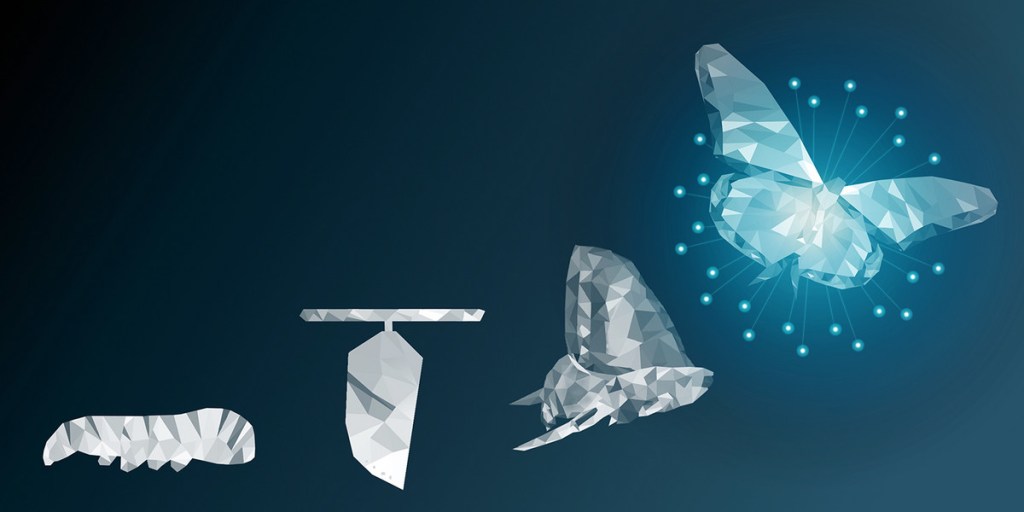
There’s a timeless saying that resonates on this topic very much, and that is: “with great power comes great responsibility”, and this is because with great power there can be great consequences. We’ve seen just how much the lack of power [technological advancements] has an impact on human life and its development. But just as a lack of power has consequences, having the power also has an impact. As technology continues to develop, development on a whole becomes more fluid, almost happening instantaneously. Just look at how easy and fast we can find a solution for every problem that occurs, we can create new ways to feed our pleasures. This puts us in a tricky loop where we can no longer sit idle in boredom, when we experience stagnation to any extent, we begin to explore our boundaries, and as a result, we are capable of hacking our learning curve, influencing a more intelligent generation of humans. With great power, we must ask ourselves: at what cost? What are the consequences of having this much power? What are the consequences of our actions? Are we compromising for the benefit of our future or some? But of all the question, the trickiest one remains: are we as humans accelerating our own development at the same rate that we are developing technology? Are we able to understand, process and sustain the limitless factors that we’re exposing ourselves to? For as advanced as technology has become, as reliant as we can be on these advancements, we too need to be sure that we are developing to the point that we can consume more, understand more, process more and be more.
The reality is, we’re at an evolutionary curve in life where we’ve taken comfort in the world evolving around us, even if that means without us. We praise evolution, and take pride in its growing prowess as its a reflection and result of our own influence, no longer having the same ambition for ourselves. As humans, we now feel accomplished setting goals that are achieved once we can develop something successfully, even with us being excluded. This is highly evident in our social systems around the world. Many people see the tools that we use as an extension of who we are, a supporting element in our lives to make tasks “easier”. But what we are missing is the direct impact that it has on us, our kids, our community and our future. Technology is nothing but a tool, but a tool can be used for any and everything. We are so hyper-focused on developing these tools that we forget that we need to just as rapidly ensure that the people who use them are capable of using them effectively and being able to minimize the negative consequences of them. More and more we see the effects of adapting our education curriculum to the current trends. People no longer strive to develop their processing skills nor their thinking skills because their reliance on these tools. One consequence is the fact that we have fewer people challenging themselves, fewer people pushing their boundaries, and fewer people being able to use their brains to process, analyze and make decisions based on their own thoughts. Where we once focused on physical, cognitive, social, emotional and moral development, we now solely focus on technological development. And while we may see technology as a positive supporting tool in our lives, we must strive to maintain our own development before we lose our independent identity, becoming nothing without these tools.
 Esoteric